- IATA raises alarm as airline payment processing costs surge to $24.5 billion
- Breaking the 19-Year Jinx: How MMA2 resolution reclaimed Nigeria’s aviation PPP future
- UK carriers hit Nigeria flight ceiling, can’t expand operations without regulatory review
- Tinubu appoints Keyamo to lead APC air mobilisation directorate, Farouk Umar, Kuku as dep. directors
- Dawodu tasks aviation sector on bridging skill gaps for Next-Gen professionals



Breaking the 19-Year Jinx: How MMA2 resolution reclaimed Nigeria’s aviation PPP future
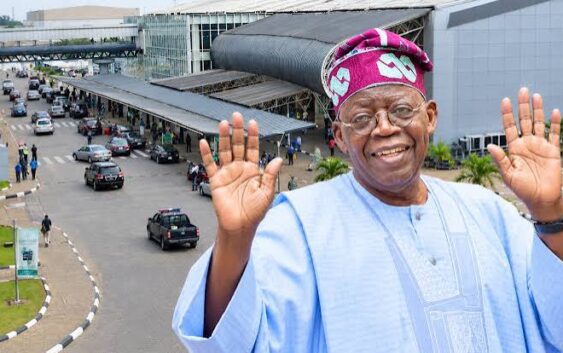
For years, the legal battles surrounding MMA2 served as a cautionary tale regarding policy instability, contractual risks, and enforcement challenges in Nigerian infrastructure concessions, writes WOLE SHADARE
For nearly two decades, travellers navigating Lagos’s bustling transport arteries faced a stark contradiction.

On one side stood the sleek, glass-and-steel facade of Murtala Muhammed Airport Terminal 2 (MMA2) Nigeria’s flagship privately operated domestic airport terminal, engineered and built by Bi-Courtney Aviation Services Limited (BASL) under the leadership of Dr. Wale Babalakin, SAN.
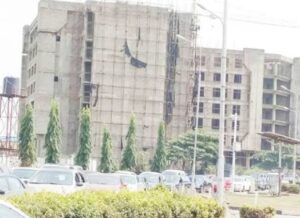
Directly across from the terminal stood the skeletal, unfinished frame of a high-rise hotel and conference centre, a stark monument frozen in time by relentless legal warfare, administrative gridlock, and commercial distrust.
This protracted conflict dates back to 2003, when the Federal Government of Nigeria awarded Bi-Courtney and its consortium partner, Stabilini Visinoni Limited, a pioneer Build-Operate-Transfer (BOT) concession agreement to design, build, and operate a modern domestic terminal after a destructive fire at the old terminal.
Under the original terms, Bi-Courtney was granted an exclusive concession period to recoup its investments, manage domestic operations, and build complementary commercial infrastructure, including a luxury hotel and multi-storey parking facilities.
However, the partnership quickly fractured into one of the most complex legal quagmires in African public-private partnership (PPP) history.
Central to the dispute was the control of the General Aviation Terminal (GAT). BASL argued that the concession encompassed all domestic flight operations within Lagos, meaning GAT fell under its jurisdiction.
Conversely, the Federal Airports Authority of Nigeria (FAAN) retained control of GAT and directly managed competing domestic operations.
The resulting friction triggered endless litigation, claims, and counterclaims. Bi-Courtney secured court judgments awarding damages exceeding ₦132 billion (with interest pushing the figure far higher over time) for breach of contract and lost revenue.
Meanwhile, federal agencies countered by demanding uncollected concession fees and operational levies totalling tens of billions of Naira.
The broader consequence was disastrous for infrastructure development: regional flight rights were withheld from MMA2, construction on the opposite hotel complex was halted, apron expansions were stalled, and foreign investors watched nervously from the sidelines.
The historical breakthrough: A landmark settlement
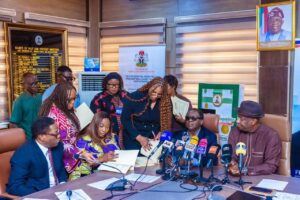
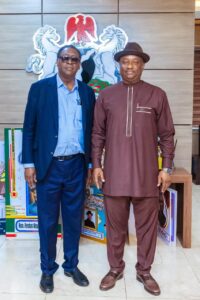
Sustained diplomatic and regulatory efforts led by the Minister of Aviation and Aerospace Development, Festus Keyamo, SAN, under President Bola Ahmed Tinubu’s direction, brought the long-standing stalemate to a decisive turning point.
Recognising that a perpetual feud benefited neither the public treasury nor the country’s aviation industry, both parties returned to the negotiation table to forge a comprehensive settlement.
The settlement framework rests on reciprocal concessions, strategic compromises, and restructured obligations. Bi-Courtney agreed to drop its massive multibillion-naira court-judgment claims against the Federal Government.
In return, FAAN formally integrated MMA2 into its statutory fee and revenue-collection framework, ensuring that the federal government begins earning regular, structured revenues from the terminal’s commercial operations for the first time in 20 years.
The Federal Government restored the concession for the abandoned hotel and conference facility opposite MMA2 to Bi-Courtney under a modern shared-revenue framework.
BASL was granted a firm 24-month timeline to complete and commission the project, removing the urban eyesore and turning it into a premier hospitality centre.
After 19 years of restriction to purely domestic routes, the government formally approved the commencement of regional international flights from MMA2.
The agreement addresses legacy issues surrounding the General Aviation Terminal while providing a clear development path for expanding apron space to handle larger passenger volumes and regional aircraft fleets.
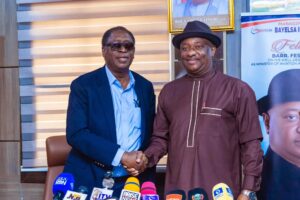
Commenting on the resolution, Babalakin praised the political courage that broke the decades-long logjam, noting that both sides approached the negotiating table as patriots intent on prioritising the national interest.
“We will not disappoint the President, the Ministry of Aviation, FAAN, or the Nigerian public,” Babalakin declared, reaffirming Bi-Courtney’s commitment to delivering world-class aviation facilities.

Commencing regional operations from MMA2
Authorising regional flights from MMA2 marks a transformative milestone for West African civil aviation. For nearly two decades, passengers travelling between Lagos and major regional destinations such as Accra, Abidjan, Dakar, Douala, and Freetown had to use the international terminal, often facing lengthy transfer delays, congested processing halls, and cumbersome transit logistics between the domestic and international wings.
With MMA2 upgraded to process regional flights, the terminal functions as a fully integrated, multi-tier travel hub. The operational benefits are immediate and far-reaching.
Domestic passengers arriving from Abuja, Port Harcourt, Kano, or Enugu can now connect directly to regional flights bound for West and Central African capitals within the same terminal building, eliminating the inconvenient transit across the airport road network.
Airlines operating regional routes can leverage MMA2’s modern baggage-handling systems, passenger boarding bridges, and streamlined security lanes to drastically reduce turnaround times and operational overhead.
To support West African connectivity, BASL is moving forward with planned apron expansions to accommodate regional jet liners and narrow-body aircraft seamlessly.
This operational shift elevates Lagos’ status as West Africa’s preeminent commercial aviation hub, allowing domestic carriers expanding across the continent to build efficient hub-and-spoke models from a privately managed terminal.
Unlocking commercial synergy
Beyond the runway and terminal gates, one of the settlement’s most economically significant components is the revitalisation of the MMA2 Hotel and Conference Centre project.
For years, the multi-storey structure sat as an unfinished concrete shell, symbolising the costly consequences of legal disputes on capital investments.
Under the new agreement, Bi-Courtney has committed to completing and fully equipping the hotel and conference complex within a strict 24-month period.
Key elements of the revival project
The hotel complex will connect directly to MMA2 via a pedestrian bridge, allowing transit passengers, flight crews, and business executives to walk straight from their arrival gates to luxury accommodations.
Designed to host international business summits, aviation conventions, and corporate gatherings, the conference centre fulfils a long-standing need for dedicated MICE (Meetings, Incentives, Conferences, and Exhibitions) infrastructure within the airport zone.
The construction and operational phases are projected to generate thousands of direct and indirect jobs across engineering, hospitality, facility management, technology, and retail logistics.
By turning an abandoned site into a revenue-generating asset shared between Bi-Courtney and the Federal Government, the project enhances the aesthetic appeal of the Lagos airport corridor while providing a steady revenue stream for both public and private stakeholders.
Restoring investor confidence: Implications for PPPs, FDI
The settlement goes far beyond airport infrastructure; it sends a vital signal to international financial markets, private equity firms, and institutional investors watching Nigeria’s economic climate.
Foreign and domestic investors were hesitant to commit long-term capital to public-private partnerships without assurances that contracts would be honoured across changing administrations.
“This resolution is not a victory for one side alone; it is a victory for Nigeria. We entered into these discussions as patriots who recognised that the nation is bigger than any commercial dispute.
By putting an end to 19 years of legal friction, we are unlocking the full potential of MMA2, creating well-paying jobs, and giving West Africa an airport terminal it can truly be proud of,” said Babalakin.
Keyamo said, “When we initiated these negotiations, many believed the conflict was completely intractable. But through mutual compromise and a shared dedication to the national interest, we reached an agreement that safeguards public revenues, reactivates abandoned infrastructure, and restores investor confidence in Nigeria’s aviation sector.”
Last line: Blueprint for national development
The definitive resolution of the 19-year dispute between BASL and the Federal Government marks a turning point in Nigeria’s aviation history. What was once a symbol of institutional deadlock has become a model for collaborative infrastructure development.
As cranes return to the hotel site and international passengers board regional flights at MMA2, the nation enters a new era of aviation growth, commercial expansion, and economic progress.
Google+